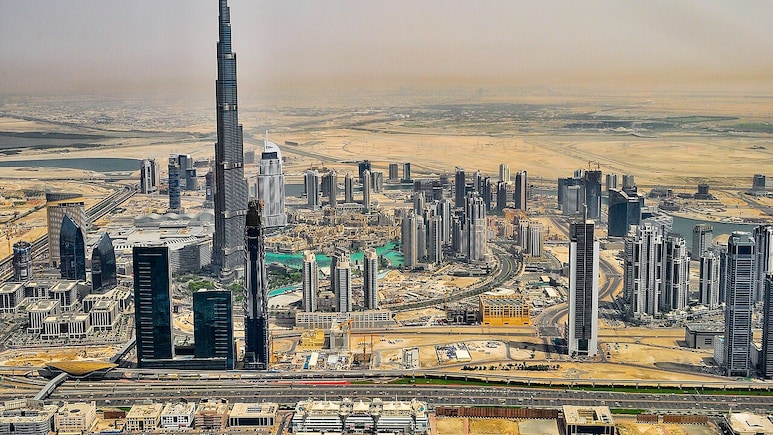
- Dubai may have only about ten days of fresh food supplies amid Middle East war disruptions
- Over 90% of Gulf region food is imported, making it highly vulnerable to supply chain issues
- Strait of Hormuz closure affects 70% of Gulf food imports and one-fifth of global oil supply
With the war raging in the Middle East, causing major disruption in supply chains, Dubai in the United Arab Emirates might be left with only around ten days of food supplies, Swiss broadcaster SRF has reported, citing an analyst.
The Gulf region does not produce much, leaving it dependent heavily on imports. More than 90% of the food consumed in the region is sourced from abroad.
The warning about diminishing food supplies was highlighted on X by analyst Shanaka Anslem, as he cited remarks made by Stefan Paul, Chief Executive of global logistics giant Kühne+Nagel.
Also Read | Layoffs Are Rising In Tech, But These Skills Are Helping People Unlock Better Pay
Also Read: Oil To Hit $150 A Barrel As Gulf States May 'Shut Exports Within Weeks', Qatar Minister Warns
Paul was speaking to the Swiss broadcaster on March 5, wherein he remarked that Dubai currently has roughly ten days of fresh produce available. The data, he said, was based on the supply chain data monitored by his company.
Around 70% of the food supplies for the Gulf Cooperation Council pass through the Strait of Hormuz, the waterway which has been closed by the Iranian authorities since the day the war began.
Apart from the food supplies, the Strait of Hormuz is responsible for the transportation of one-fifth of the global oil supply. The oil prices are skyrocketing too, with some experts commenting that the prices might reach as high as $150 a barrel in the coming days.
Meanwhile, air-freight capacity has also taken a severe hit during the war, aviation analytics firm Aevean has revealed. The firm, cited by Reuters, shows that air cargo capacity serving the Middle East has fallen 22% between Feb. 28 and March 3.
Compounding the situation further, the disruptions at Jebel Ali region's largest port and a key logistics hub have been adding heavily to the toll. The port serves tens of millions of people across the Gulf and was struck on March 5. Operations have partially resumed at the port.
Reports suggest that the compounded disruptions in sea routes, air cargo, and port infrastructure have particularly affected the perishable food supplies in the Gulf region.
Fresh produce, fruits, vegetables, and dairy included, have a short shelf life, making it hard for the logistics providers to reroute them through longer routes, which can add four to six weeks of transit times.
The warnings are early, given that the UAE maintains reserves of grain, frozen foods, and other non-perishable foods, but the first signs of the disruption can appear in the supermarkets where supplies of fresh produce may begin to thin very soon if supply routes do not ease out.
The situation is a direct impact of the war, and underscores how civilian lives can get disrupted in times of such conflicts, putting pressure on supply routes and infrastructure.
Also Read: 'Would Be A Big Disaster For Them': Iran Says They Are Ready To Confront US Ground Invasion
Essential Business Intelligence, Sharp Market Insights, Practical Personal Finance Advice, Daily Fuel, Gold and Silver Prices and Latest Stories — On NDTV Profit.